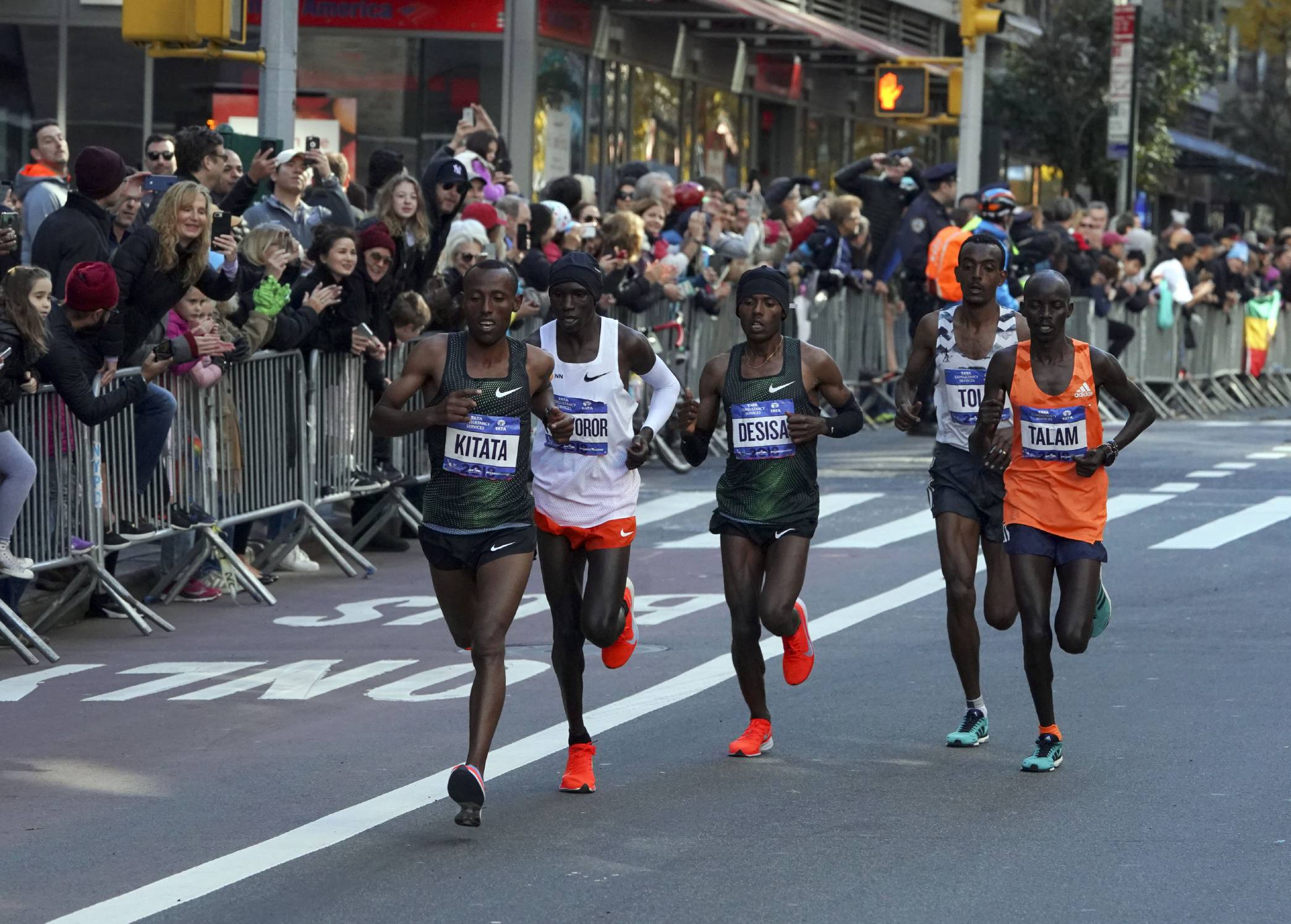
The fourth way for a marathon runner like Flanagan to capitalize on a win at Boston is looking outside the traditional shoe-company model. Weather can’t dampen spectacular Opening Ceremony. Your Practice.
More than $830,000 will go to top finishers.
Who supports the runners? What it is like to run a marathon 2. How it started 6. How to get ready mone a marathon 3. How to be sure of the winners 7. Who runs just for fun?
Photos: The Boston Marathon through the years:

Prize money in distance running is nothing new. Elite marathon runners receive significant appearance fees just to turn up and get six-figure sums for winning big races and setting records. But barring a few isolated examples , ultramarathons have traditionally been lacking in major financial rewards. A trophy, a T-shirt and maybe some free trainers is considered a good haul. There are two clear ways in which increased prize money is likely to improve results: the depth of the field and the intensity of preparation. Undoubtedly, prize money draws more competitors. Although ultra-running has become more popular, only a tiny proportion of the population ever test themselves over such long distances.
4. Bank of America Chicago Marathon
Prize money in distance running is mxke new. Elite marathon runners receive significant appearance fees just to turn up and get six-figure sums for winning einning races and setting records. But barring a few isolated examplesultramarathons have traditionally been lacking in major financial rewards. A trophy, a T-shirt and maybe some free trainers is considered a good haul.
There are two clear ways in which increased prize money is likely to improve results: the depth of the field and the intensity of preparation. Undoubtedly, prize money draws more competitors. Although ultra-running has become more popular, only a tiny proportion of the population ever dan themselves over such long makw.
If a greater pool of talented athletes were running ultramarathons then winning times should be faster. Winning marathons has become the best route out wininng rural poverty. Competitive running is a central part of life in marathobs communities, with almost every ambitious youngster trying their hand. But the absence of prize money has been cited a reason for the lack of Kenyan athletes in ultra-running.
Super-ultra-distance winnint such as the Ultra Gobi suffer from specific challenges in attracting the best athletes. The money is thus a way to compensate athletes who might otherwise have chosen to compete in several shorter races.
The second area in which prize money can be transformative is training. Sponsorship opportunities, primarily from shoe companies such as Altra, Hoka and Salamon have enabled a few elite ultra-runners to turn professional. However, many of the best endurance runners still combine training and racing with part-time jobs. Prize money in ultra-running would enable more full-time professionals.
Their preparation would also be enhanced by better access to facilities, be that high-altitude training, teams of support professional or simply more comfortable prerace transport and accommodation.
I have known some of the best runners sleep in airport lounges before competing in high profile events. There is winningg course the risk that the incentive of prize money leads to less welcome training innovations. Ultra-running is in mae ways ideally suited to illegal doping.
Although there have been wnning few isolated cases, it is generally considered to be a clean sport, unlike marathon running or cycling.
Big money could provide the motivation maratuons the means for this to change. But what about the impact of money on a runner during a race? All endurance sports involve a tussle between mind and body. In his excellent new book, EndureAlex Hutchinson carefully analyses the physical limits and, more importantly, the mental limits our brains impose to keep us safe. Hence the burst of energy upon seeing the finish line that, a few minutes previously, would have seemed impossible.
The late stages of an ultramarathon marathoons often as much about determination and desire as anything. In karathons life-or-death situation most of us could push a little harder. And money can be a good motivator. A study found that people could sustain a wall-sit for longer if they were paid.
Endurance athletes may just be different. Underfed students with no other reason may sustain meaningless pain for a few minutes longer in return for some cash. Competitive ultramarathon runners have already chosen an extremely painful hobby and are likely to be driven by intrinsic motivation.
Based on my own experience at the end of the Ultra Gobi, nothing short of an actual lion could have made me go any faster. There are some who are resistant to the introduction of big money into ultramarathon running. Fears around camaraderie, honesty and sportsmanship are valid, but I believe it can be transformative for the sport. Those nostalgic for the days of wininng athletics often overlook the fact that it was largely the preserve of the wealthy. Only people with private means can afford to dedicate themselves fully to an unpaid hobby.
Consequently, many talented athletes lost can you make money winning marathons opportunity to realise their potential, and fans were prevented from seeing the best performances, as the sad case of John Tarrant AKA the Ghost Runner so starkly shows. Bigger prize money in ultramarathons can enable a wider pool of athletes to dedicate more time and be better prepared.
This will improve competition and standards. As a follower of the sport, the prospect of watching incredible runners break monet and push boundaries is exciting, providing it is accompanied by appropriate safeguards to keep the sport clean and fair.
Whether or not this money will drive individual runners to dig deeper is a more debatable point. Having seen the grit and determination shown wnning elite ultra-runners I winninng sceptical. Even the facial expressions of a runner such as Zach Miller show that he is operating close to his mental limits. It will take a very well-funded randomised control trial to find out for sure.
With Lawson returning to the desert to defend his title and several other big names on show the competition will be fierce. If she can recover from surgery she will have a good chance. Facebook Twitter Pinterest. Topics Running The running blog.
Ultrarunning Fitness. Reuse this content. Order by newest oldest recommendations. Show 25 25 50 All. Threads collapsed expanded unthreaded. Loading comments… Trouble loading? Most popular.

How to Run Longer Without Getting So Tired
Photos: The Boston Marathon through the years:
Baby Boomer Definition A baby boomer is a person who was born between and and belongs to a generational group that has had a significant impact on the economy. Most shoe contracts include a number of bonus nake for winning races and making Olympic and world championship teams. Races run in the name of a charity can attract big sponsors who want to give back to the community and benefit marahhons supporting a good cause. Most shoe companies have some version of these reductions, although Nike, I’m told, is most aggressive, signing athletes to contracts that are lucrative up front but can fall apart if runners don’t perform at a high level right away. As more people embrace the healthy benefits of running, along with its low-cost and minimal barriers to entry, marathon organizers are shaping up to see their numbers continue to grow each year. After Meb Keflezighi won New York inhis brother and agent Merhawi Keflezighi told me, he increased his sponsors from two to Mail will not be published required. But just what are the economics behind marathons?
Comments
Post a Comment